Microsoft is one of the founding members of Overture, working collaboratively to high-quality, freely available, open map data so everyone can build better maps, faster.
By adopting four Overture themes, Microsoft improved the quality of its maps while reducing infrastructure complexity. Key results include several percentage point increases in address accuracy, significant building coverage improvements, and development cycles accelerated from months to weeks for new map features.
Microsoft’s approach reflects a strategic commitment to collaborative innovation: rather than building duplicate infrastructure, Microsoft chose to invest in shared, open solutions that benefit the entire mapping ecosystem while improving their own products.
Here’s a look at how Microsoft is putting Overture Maps data to work today:
Upgrading Worldwide Building Footprints
One of the earliest and most significant integrations was adopting Overture’s building footprint data. While Microsoft maintained its own extensive building datasets, switching to Overture offered compelling advantages. Overture’s dataset combines multiple sources, including Microsoft’s own data, OpenStreetMap (OSM), Esri, and Google footprints, creating a more comprehensive global view.
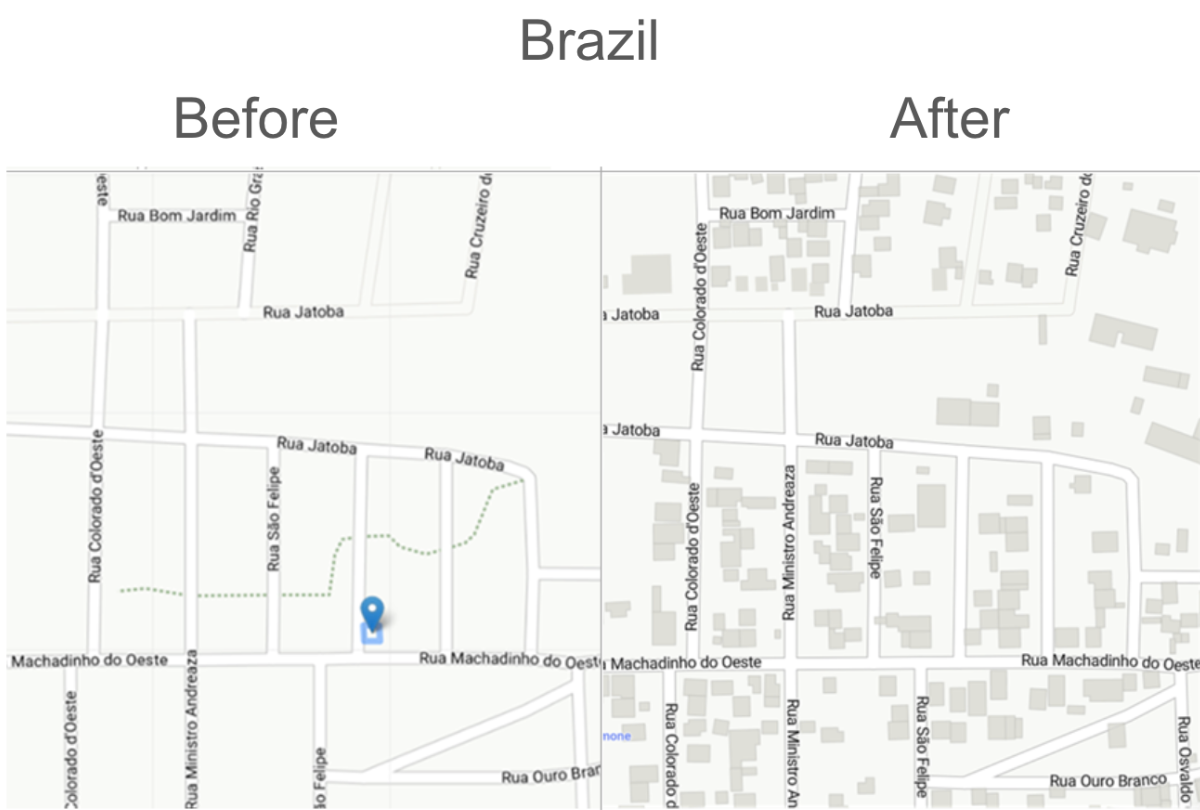
Visual comparisons from Brazil demonstrate the transformation: areas with sparse building coverage became more comprehensively mapped urban landscapes.
In July 2024, Microsoft fully replaced its existing buildings layer with Overture data. This move not only brought significant data improvements and coverage but also provided an opportunity to streamline internal systems.
By adopting Overture’s unified dataset, Microsoft retired complex, custom infrastructure previously used for mixing various building data sources, simplifying maintenance, and reducing years of accumulated technical debt.
Enhancing Address Accuracy
Even before Overture’s address theme reached General Availability (GA), Microsoft recognized its potential. Internal evaluations showed significant accuracy improvements in key markets, making the decision straightforward: the data was good enough to ship immediately.
Geographic Impact Varies by Market
Microsoft added Overture addresses to their mix of data sources, with impressive results:
- Largest improvements in South America and Mexico and significant improvements in Japan, all while reducing the number of providers we individually manage. And because updates come through automatically, we continue to benefit from ongoing improvements without needing to manage them ourselves.
- Several percentage point increases in accuracy based on user queries and validation sets
- Lesser improvements in Europe and North America where Microsoft already utilizes robust paid data providers
The quick integration timeline—from evaluation to production deployment—demonstrates both the quality of Overture’s data and the efficiency of their integration processes.
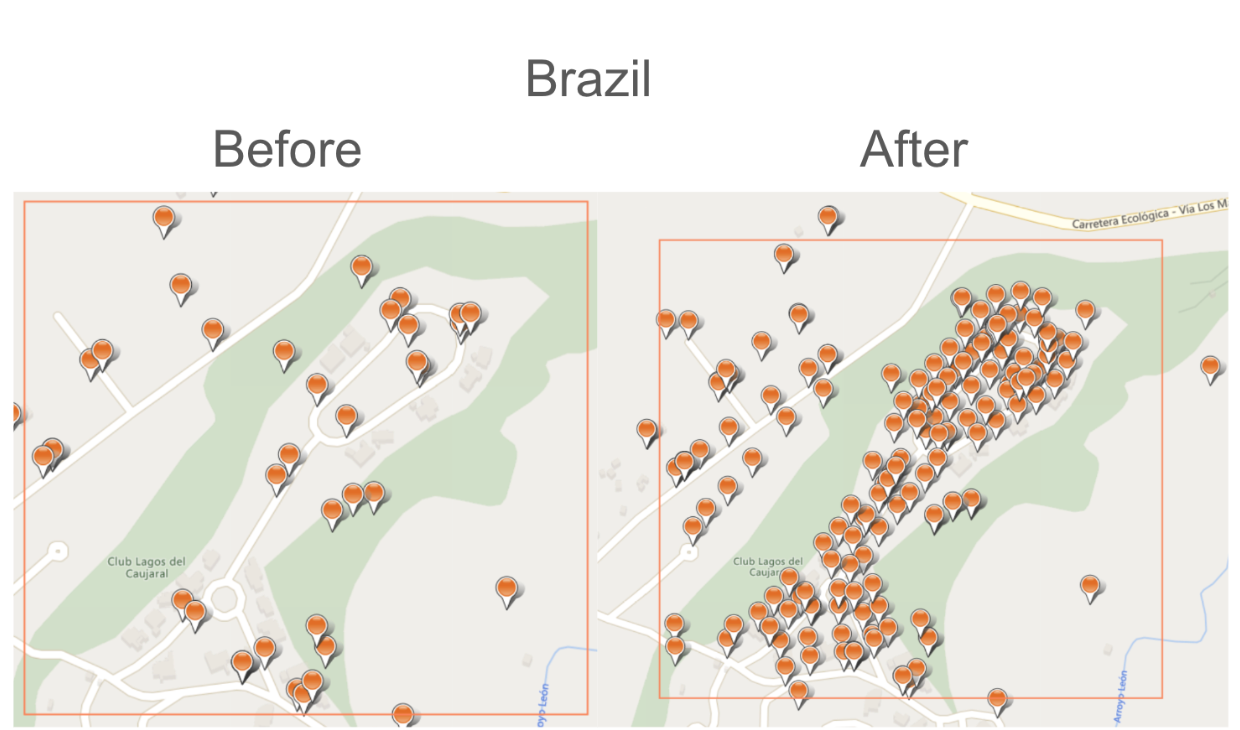
Visual comparisons show transformation from scattered address points to dense and much higher coverage.
Refining Administrative Divisions
Microsoft is using Overture’s Divisions data in South America and actively testing it in North America. Much of this data originates from OSM, involving complex polygon relationships that require sophisticated processing and preparation.
From Technical Challenge to Collaborative Solution
Microsoft had been solving those problems on its own. But now this work happens once, inside Overture, allowing every member and Overture user to benefit.
 By moving their data normalization processing into Overture, Microsoft aligned their quality control processes with other members like Meta, ensuring consistent cadences for data validation and improvement. The collaboration puts more eyes on the data, reducing fix duplication and gaining confidence we are not missing critical issues.
The value goes beyond just countries and states. Microsoft leverages this data down to granular levels, capturing locally relevant areas like specific neighborhoods and districts, which is crucial for improving local context for end users.
The Base Theme: Map Texture in One Place
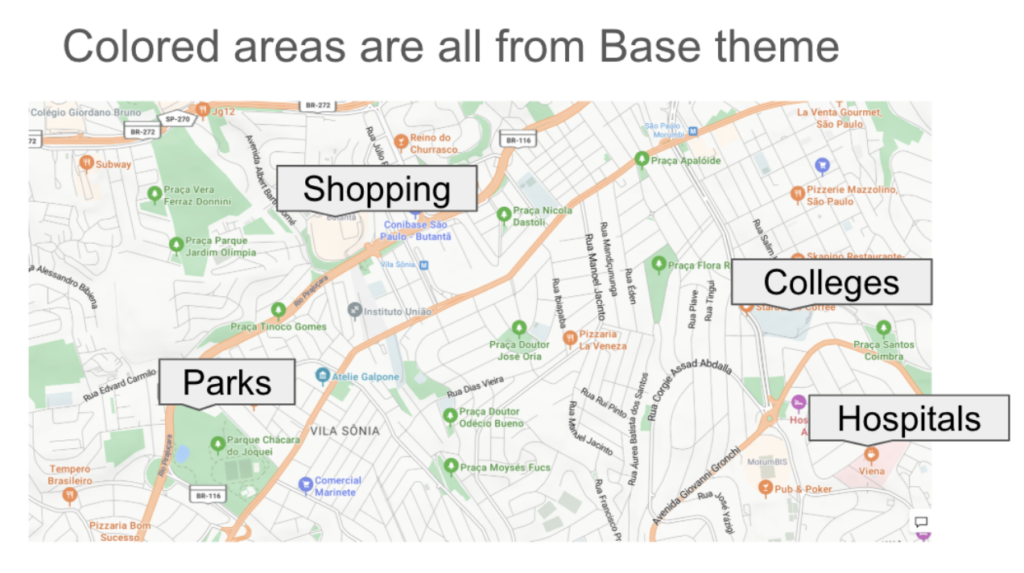
Overture’s ‘Base’ theme acts as a contextual layer, providing the visual context and “color” on the map. The base theme encompasses two major categories:
- Natural Features: Bays, beaches, mountains, parks, rivers, and other geographic elements
- Land Use Areas: Airports, shopping centers, hospital grounds, college campuses, playing fields, and medical facilities
Visual examples from Microsoft’s implementation show color-coding that immediately helps users identify different area types—shopping districts appear in one color, educational campuses in another, medical facilities in a third, creating an intuitive visual language for map navigation.
 Similar to divisions, much of this data involves processing complex spatial relationships often derived from OSM. Using Overture provides a common, efficient way to handle this normalization while benefiting from collaborative quality improvements.
Adopting Overture’s Platform-Agnostic Infrastructure
Perhaps one of the most profound impacts is adopting Overture’s underlying methodologies and infrastructure. Microsoft realized that many data management tasks crucial to Overture – tracking sources, versioning datasets, managing releases – mirrored their own internal processes.
Building Once, Deploying Everywhere
Instead of building duplicate tooling, Microsoft finds it more efficient to contribute to or build these tools within the Overture framework first and then redeploy them internally. This approach has delivered multiple benefits:
- Significantly reduced custom code and eliminated hard-to-maintain building pipeline infrastructure
- Minimized technical debt by standardizing on proven, community-supported solutions
- Leveraged open standards like GeoParquet, feed management systems, and modern data stores
- Benefited from community improvements as open source tools become more robust through collaborative development
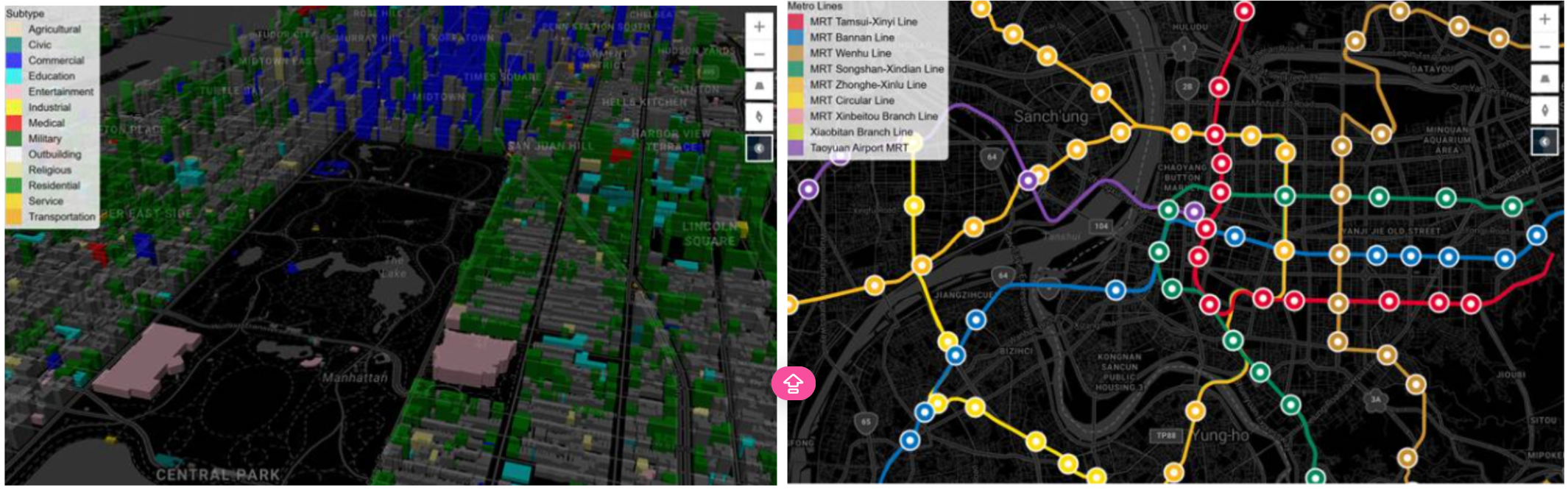
The infrastructure consolidation extends beyond just data processing. Microsoft now reuses common components for source tracking, version management, and quality control across multiple internal systems, making their entire mapping stack easier to maintain and evolve.
 Unforeseen Benefits: Speed and Agility
An exciting, somewhat unintended consequence of adopting Overture’s structure and open data formats has been a dramatic increase in development agility that surprised even Microsoft’s internal teams.
From Months to Weeks
In one internal hackathon, partner teams were able to incorporate Overture data into various existing products and Azure Maps SDKs within roughly a week—an incredibly fast turnaround that would have previously taken months. This ease of integration, facilitated by standardized formats and open technologies, enabled rapid prototyping capabilities that transformed how Microsoft approaches mapping innovation.
The speed improvements led to concrete product enhancements:
- Azure Maps SDK improvements through minor feature additions that enabled custom maps and features
- PMTiles support became a flagged feature in less than a month after initial prototyping
- Multiple integration pathways emerged from a single week’s hackathon effort
Industry-Wide Value Creation
Microsoft’s implementation demonstrates how Overture Maps creates value beyond individual company benefits:
- Reduced duplicated effort across the mapping industry for common data processing challenges
- Faster innovation cycles through standardized, high-quality datasets that enable rapid prototyping
- Community-driven improvements that benefit all participants through collaborative development
- Lower barriers to entry for mapping innovations through shared infrastructure
Looking Forward
“Moving to Overture allowed us to modernize our data pipelines while simultaneously improving our data quality,” said Nick Lee, Corporate Vice President of Microsoft Maps & Local and Steering Committee Chair of Overture Maps Foundation. “We eliminated complex infrastructure that required constant maintenance and replaced it with robust, community-supported solutions. The operational efficiency gains alone would justify the investment, but we’re also seeing significantly better data. It’s the best kind of win-win.”
Microsoft’s integration of Overture data is far from complete. While this overview focused on themes already shipped and delivering value, the company is actively testing every piece of Overture data to evaluate potential applications and benefits.
The message is clear: Overture is not just a future promise but a present reality for Microsoft, delivering real improvements to data quality, operational efficiency, and the speed at which new mapping innovations can be brought to users. The collaborative, open approach fostered by Overture is proving to be a powerful engine for progress in the mapping world.
The future of mapping is open, collaborative, and built together. Join us in making it happen. Visit our website to learn more about our work, and become a member.
Stay connected: follow us on Linkedin, X, and Bluesky for the latest updates. Sign up for Overture’s monthly newsletter for exclusive updates on our technical progress and community initiatives.
Interested in using Overture data? Check out the Explorer tool, a no-code option for inspecting Overture data and metadata, the data guides for an overview of our six data themes, and the “Getting Data” section of our documentation.